
Modern Professional Header (Mobile Fixes)

Acute Wounds

Start Your Path to Healing

Please send us a question, and we will respond to you shortly. 
Acute Wounds

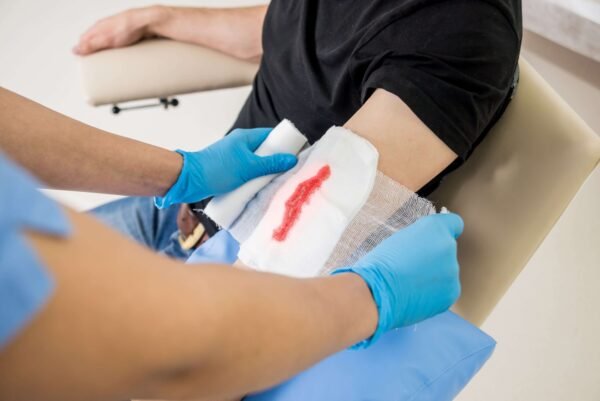
Acute wounds are injuries to the skin and underlying tissues caused by external forces. They can result from various incidents, including accidents, such as burns, falls, sports injuries, or violence.
Acute wounds can occur due to a range of different circumstances such as environmental factors, road accidents, any type of thermal or chemical exposure (burns), and animal bites
Conditions
Treatment Options
Apply appropriate dressings to keep the wound clean and moist where approporiate. Change dressings regularly and monitor for signs of infection. Advanced therapies may be needed to quicken healing and reduce scarrring.
Haemostasis: Your first step should be to stop the bleeding. To do this, first identify where the bleeding is coming from. You may need to apply pressure, use elevation or use a tourniquet, clamp or suture to stop the bleeding. Stopping the bleeding will also help you to accurately assess the wound.
Cleanse the wound: If your patient has a minor acute wound, you can use detergent and water to cleanse it. However, if your patient has a deeper or more complex traumatic wound, you should flush it with a neutral cleansing solution. This will remove any contaminated material.

Debride the wound: Most traumatic wounds will be ‘clean’ after you have irrigated them. However, if the wound is devitalised or contaminated you will need to debride it. When you debride the wound, you remove unhealthy or dead tissue from the wound bed. This helps the wound to heal.


Close the wound: When you close the wound, you have three main objectives. One, you want to support the tissues until the healing process can restore tensile strength. Two, you want to minimise the risk of bleeding and infection. And three, you want to close the dead space by bringing together the wound edges. This will ensure the best functional and aesthetic result.

Give medication: If your assessment reveals that the wound has a high risk of infection, you may choose to prescribe prophylaxis antibiotics. Depending on the type of wound, an analgesic or a tetanus injection might also be necessary.

Frequently Asked Questions

What happens if wounds are left untreated?

Any wound that isn’t properly assessed, cleaned and covered can allow bacteria, viruses or fungi to enter through the opening in the skin, leading to infection which can cause the person to become very unwell.

How is my Acute wound treatment delivered

Your treatment can be delivered in a variety of ways. You may wish to attend in person for some or all of your appointments at one of our Centres in Sussex or the Midlands. Or alternatively, following your initial consultation, we can provide you with a treatment plan so you or your loved one can arrange for some/all of this care to be shared with your local care provider.
Wound Specialist
💰 Insurance?
📅 Book Visit
🩹 Services
🚨 Infection